



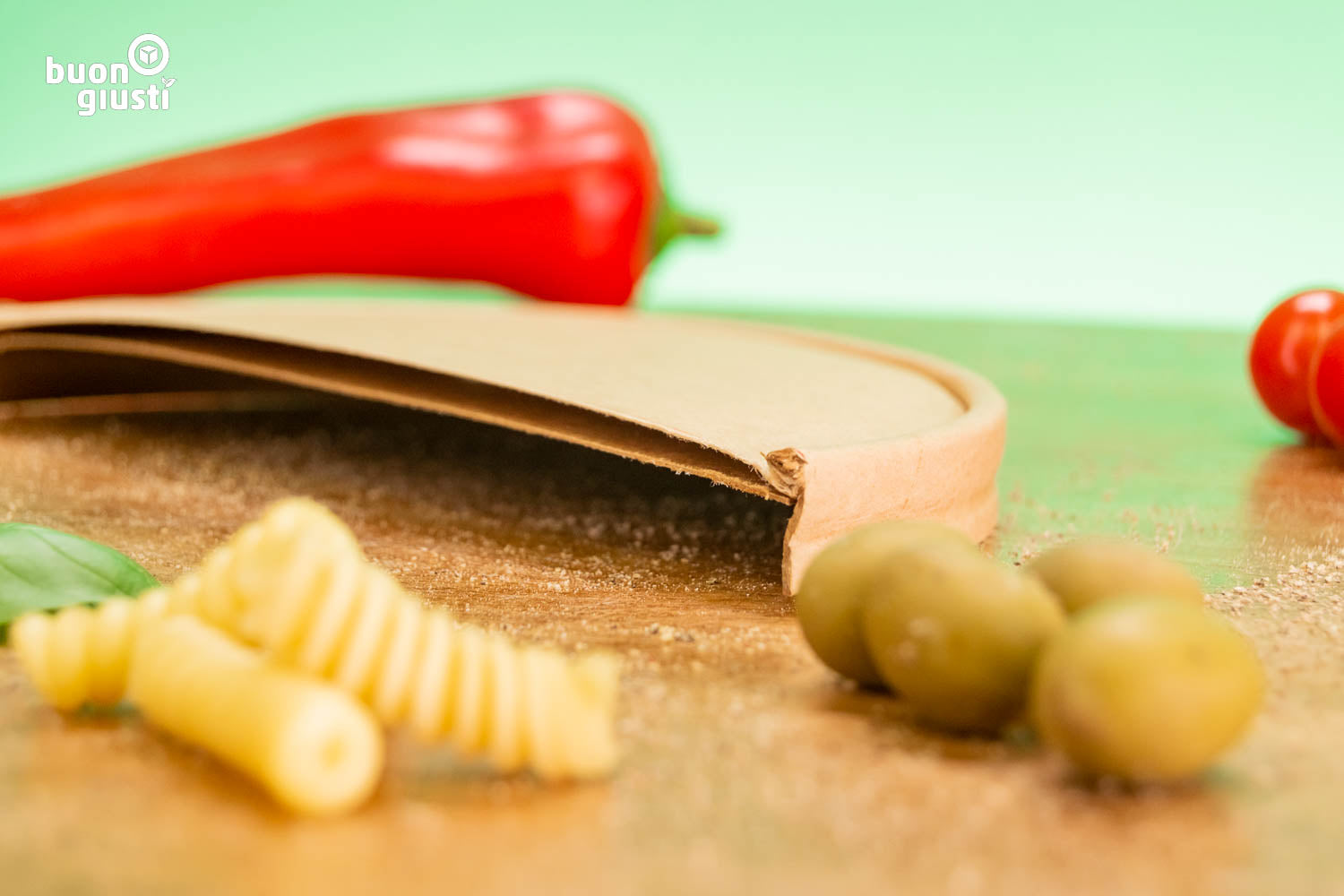
Our packaging is approved for food use and complies with the applicable European regulations. However, the material you need depends on what goes inside – hot, cold, greasy, or liquid foods each have different requirements.
The cardboard itself
The base is usually FSC-certified cardboard. The seal means that the wood comes from controlled forestry and that the forest remains a forest. Kraft paper is a particularly tear-resistant type of paper, known for its typical brown look – the name comes from the manufacturing process, not from advertising.
Uncoated cardboard alone, however, cannot withstand oil or sauce. It soaks up the liquid and becomes soft. That’s why coatings are used.
The coating makes the difference
A coating is a very thin layer on the inside that prevents liquid from penetrating the fibers. Two variants are common.
PE is the classic plastic coating. It is durable and resistant but is petroleum-based.
PLA serves the same purpose but is made from plant-based raw materials like corn starch. If you want to tell your guests that your packaging is petroleum-free, this is the option for you.
For transparent lids and cups, rPET is used – recycled plastic needed where visibility is important.
What fits what
For hot foods, steam is the issue. Pasta, soup, or casseroles need a heat-resistant container and a cardboard lid that allows some steam to escape. Otherwise, moisture condenses and the food becomes soggy.
For cold foods, the opposite is true. A salad looks better under a clear lid, and since no steam is produced, there’s no problem. Just make sure that such a clear lid is not used on hot food – it’s not designed for that.
For greasy foods, fat resistance is key. Fries, burgers, or anything fried belongs in material that doesn’t soak through; otherwise, the guest ends up with grease on their hands.
Ask about special cases
Very hot liquids, highly acidic foods, or dishes that need to be kept warm for a long time are borderline cases. If you offer something like this, briefly describe it to us. We will then tell you which material is suitable – better to ask beforehand than to have a problem during operation.


